Week Six: Grief
- Gina Mollett
- Nov 2, 2025
- 4 min read

This week I've been thinking about grief, and how creativity and nature can support the grieving process. Grief is described as the mental or emotional suffering or distress that is caused by loss. During my own experiences of grief I have often turned to nature as a way of understanding the cycle of life and the emotions that I may be carrying. I have pressed flowers from sentimental places, carved wild flowers out of stone and sculpted out of clay. Slow processes and craft techniques that connect to the earth have been key to my own healing, and I am starting to recognise that creativity can help a person to transform with grief rather than to become stuck within it.
Within my Creative Health and Wellbeing course this week we thought about legacy. The legacy of a loved one that has passed, and the legacy that we want to leave behind ourselves one day. I thought about loved ones and the things that their life and death has taught me. I started to see that grief had started to become a celebration of a person's life and that it didn't just have to involve sadness and distress.

I've turned to a couple of books that have helped me during my own times of grief. Good Mourning: Honest Conversations about Grief and Loss, written by Sally Douglas and Imogen Carn, has helped me to demystify grief and understand that there is no right or wrong way to grieve - and that it can also involve laughter! The first chapter titled 'The Elephant in the Room' addresses the misconceptions of grief:
"Our grief is as individual as we are. The way you respond to loss boils down to so many factors, including the role the person played in your life, past experiences, other life stressors, your mental health, cultural beliefs, and even your perception of death."
"Talking about the person who died might sound strange to others, and there can be the assumption that even saying their name will upset us or remind us that they're dead - as if we could forget that! But in reality it's quite the opposite.."
"Grief is learning to cope with major change, and it lasts a lifetime. It changes with intensity, but it is always there. It's how we learn to live with it that matters."
Drawing on Grief by Kate Sutton is packed with journaling prompts for drawing and writing about grief. This includes drawing a memory of a loved one that makes you laugh. Or asking where we can find comfort when we miss them? She writes:
"I'd heard about working through the stages of grief like it comes to an end, but I found the reality to be very different. It's ever changing and never ends."
"I didn't always find it easy to express myself verbally, so drawing became invaluable for getting my feelings out of me, and helped me share what I was going through. A picture can say so much, sometimes more than words."
"Grief can be a lonely place."
The Nettle Dress is a film that follows textile artist Allan Brown as he begins a seven year project to create a dress from stinging nettles foraged from the woods surrounding his home. He processes the nettles for fibres that he then hand spins into thread to be woven into cloth. During the process, Allan loses his father and wife:
"It was like I was being equipped with the necessary tools that was going to get me through what was coming up."
"On some levels it feels like it's been a process of weaving a shroud because it was totally there to absorb loss and grief. That feeling has gone into it, but it's been transformed. The threads are weak. The mind and body have been weak. But yet now this thing is really strong. The process is what has really been the most transformational."
"I started to feel that I don't need to worry about where all these threads are heading because it's already in there where they are going. So I've just got to follow the next step and do the next thing."
"It keeps demanding that you take the slow road. Each slow process fills it with intention. It's like the history of the last seven years crystallised into this material. Seven summers, seven seasons of nettles, seven winters of spinning, seven years of experimentation and experience that makes this cloth up."
"It's like the nettles gave me this gift. That stinging plant that wants to keep you away demanded a different way of being in order to unlock those secrets. It felt like I was being transformed by the nettle rather than the other way round. It's just like a slowing down acting like a break on my mind."

I am questioning how natural colour making can support the grieving process. This could involve natural colour making in sentimental places or exploring the symbolism of plant life. I also think of the aspect of grief that is about rediscovering a sense of self and just how important it is to have a break from thinking about the loved one that we have lost. I am thinking of times when creativity and nature have helped me to remember who I am as a person, igniting a sense of adventure and curiosity in the world again. How important it is to make new memories, visit new places and not be all consumed by grief.

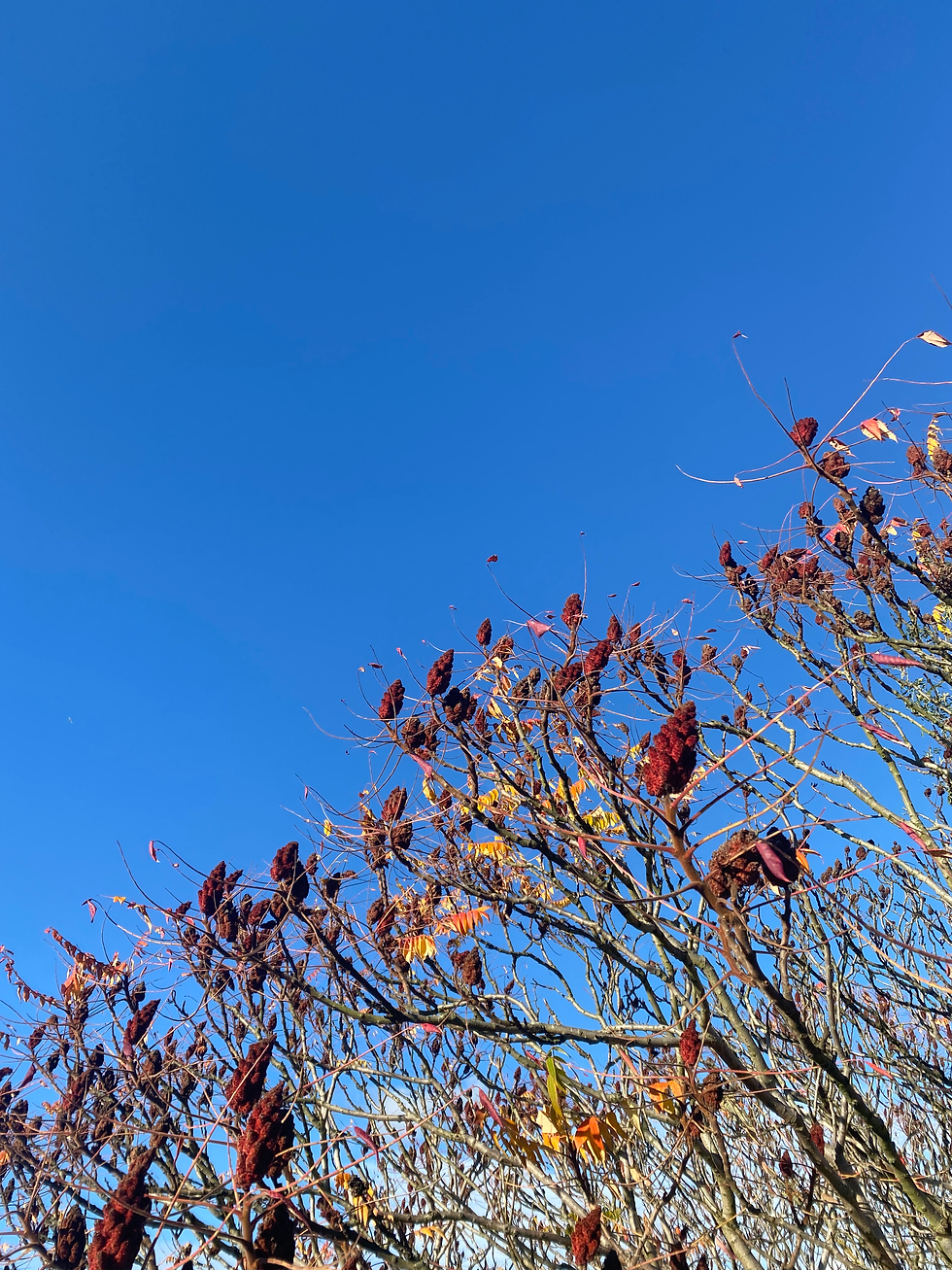
So here I am, spending my Sunday morning collecting plants for natural colour making along the Erewash Canal. I was incredibly excited to find a variety of plants that can be used in my local neighbourhood including marigolds, mugwort, yarrow and sumac! I forgot to take my foraging bags so my pockets were stuffed with items collected along the canal path. I wonder what can be found along this route in the seasons to come. Over the next week I will start to process and modify these pigments to see the rainbow of colours that can be made.

"After every storm there is a rainbow."


